Loading...
Serving Watsonville, CA and surrounding areas. (831) 666-1876
Cedar holds up to Watsonville's coastal air because of its natural oils - no chemical treatment needed. We design and build cedar decks that work with your yard, your budget, and your timeline.
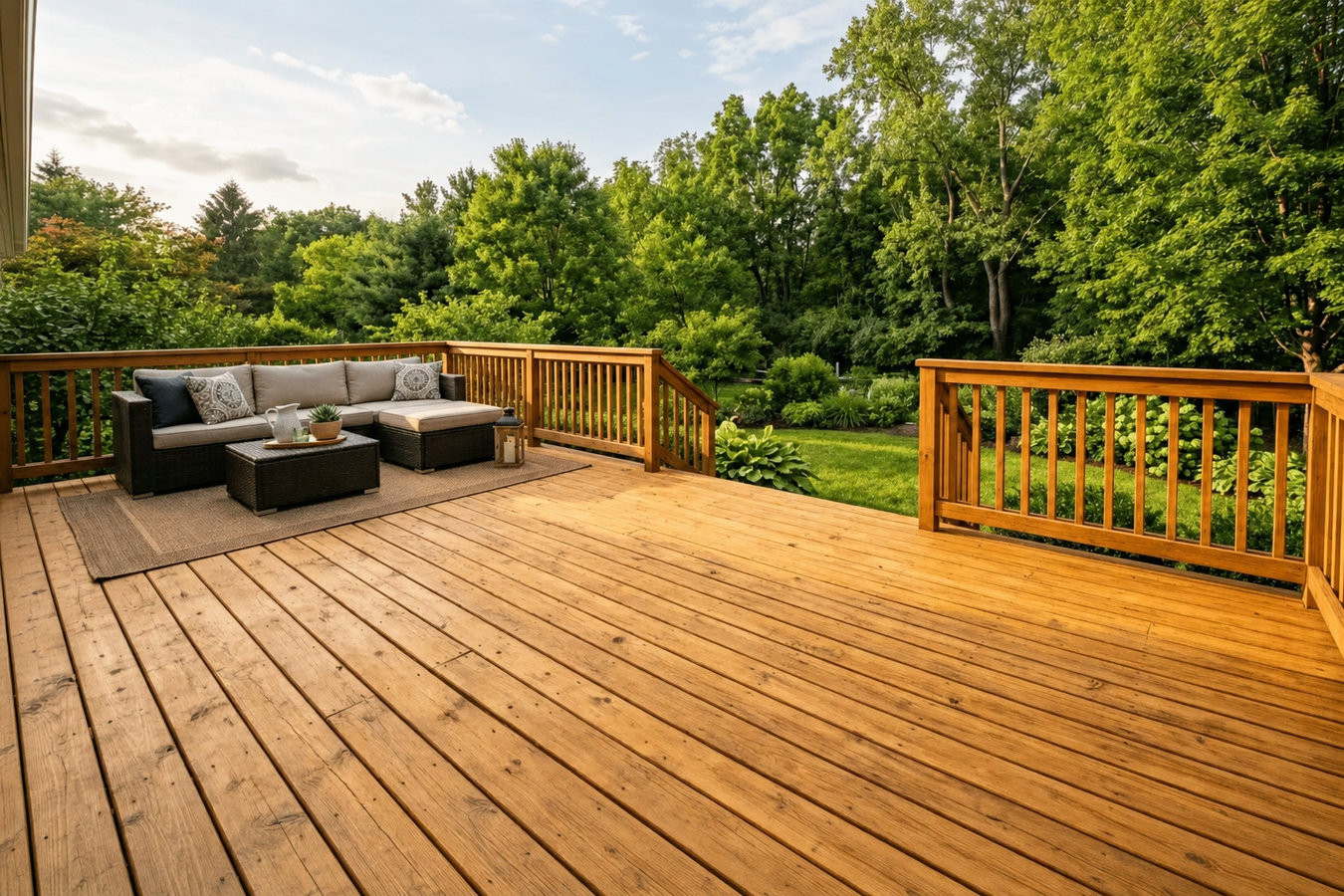
Cedar wood deck construction in Watsonville, CA means designing, permitting, and building a deck using cedar lumber - most residential projects run one to two weeks of active construction once Santa Cruz County approves the permit.
Cedar is one of the most popular choices for outdoor decks in Watsonville because the wood contains natural oils that resist rot, insects, and moisture without any chemical treatment. That matters more here than it would in an inland climate. The marine layer off Monterey Bay brings persistent moisture that accelerates wood deterioration - and cedar is genuinely better suited to handle it than most species. If you are also considering a low-maintenance option, our deck repair and replacement page covers what to do when an existing structure has run its course.
The foundation work is the most important part of any deck build in this area. Watsonville sits on clay-heavy Pajaro Valley soils that expand when wet and contract when dry. Footings that are not dug deep enough or sized correctly for those soil conditions will shift, and a shifting footing means a deck that does not stay level. Getting that step right from the start is what separates a deck that holds up for 20-plus years from one that starts showing problems within a few.
If you look out at your yard but rarely go into it, the missing piece is often a defined outdoor space. A deck gives you somewhere to put furniture, share a meal, or just sit with a cup of coffee in the morning. In Watsonville's mild climate, that is a space you would realistically use most days of the year - not just a few summer weekends.
If you press on a board and it gives slightly underfoot, or if you see dark discoloration and crumbling wood at the edges, the deck has moisture damage that will not improve on its own. Watsonville's coastal air accelerates this kind of deterioration, especially on decks that were not built with proper drainage or were not sealed regularly. At a certain point, repair stops making financial sense and replacement is the smarter call.
A deck that bounces, sways, or has visible gaps where it meets the house is signaling a structural problem underneath. This is especially common in Watsonville's clay-heavy soils, where footings can shift over time as the ground expands and contracts. This is a safety issue, not just a cosmetic one - a deck that feels wrong underfoot should be evaluated by a professional right away.
Buyers in the Watsonville market expect outdoor living space. A bare yard with no deck or patio can make a home feel incomplete compared to neighboring listings. If you are preparing to sell - or simply want to get more out of your property - a cedar deck is one of the faster ways to add visible appeal and usable space.
Every cedar deck we build starts with a proper foundation - footings dug and poured to the depth and diameter that Watsonville's clay soils require. From there, we frame the structure and lay the cedar decking, finishing with the railings, stairs, and any built-in elements you want. We handle the full permit process with Santa Cruz County, including plan submission and all required inspections. If your existing deck has seen better days and you need an honest assessment before deciding, our pressure-treated wood deck construction page is also worth reading if you want to compare cedar against a treated-lumber alternative.
Cedar is available in several grades, and the right choice depends on your budget and how important the grain and color appearance are to you. Clear cedar has fewer knots and a cleaner look; knotty cedar has more character and costs less. We walk you through the options and help you make a decision that fits both your aesthetic and your budget. We also apply a water-repellent finish after construction so the wood is protected from the start - and we tell you exactly when and what to apply for the first re-coat, so you are not guessing later.
Best for flat or gently sloped yards where a simple, accessible platform gives you outdoor living space without a complicated build.
Suited to homes with a back door raised off the ground, where a landing and stairs are needed to connect the deck to the yard below.
Ideal for elevated decks or homeowners who want a finished, code-compliant perimeter that also adds to the overall look.
A good fit for homeowners who want built-in benches, planters, or a defined area for a gas grill integrated into the deck from day one.
Watsonville sits a few miles from Monterey Bay, and the marine layer that rolls in most mornings is real. Salt air and persistent humidity are harder on outdoor wood than the dry conditions most of California experiences inland. Cedar's natural oils give it a genuine advantage in this environment - it does not need chemical treatment to resist rot the way pressure-treated lumber does. But even cedar needs to be built and finished correctly for coastal exposure. Board spacing, drainage, and a proper initial sealant all matter more here than they would in a drier climate. Homeowners in Freedom, CA and surrounding agricultural communities face these same coastal conditions and have the same considerations when choosing deck materials.
The soil conditions in the Pajaro Valley add another factor that inland projects do not have to account for. The clay-heavy ground here moves more than most homeowners realize - expanding when the winter rains soak it, and shrinking as it dries through summer. A deck built without footings designed for that movement will start shifting within a few years. Homeowners in Aptos, CA deal with similar soil and coastal conditions and benefit from the same attention to footing depth and sizing. Getting the foundation right the first time is what makes the difference between a cedar deck that lasts 20 years and one that needs structural work in five.
For more on cedar's performance in coastal environments, see the Western Red Cedar Lumber Association. For building standards and best practices, see the North American Deck and Railing Association.
Reach out by phone or online. We ask a few basic questions about your space, the size you have in mind, and roughly what your budget looks like. We reply within one business day to schedule a site visit.
We come to your property, measure the space, and walk through your options. We note slope, soil conditions, and how the deck connects to your home - all of which affect the design and the price. You get a written estimate before we leave.
Once you sign a contract, we submit the permit application on your behalf. Permit review through Santa Cruz County typically takes two to four weeks. We handle all paperwork and schedule the build start once approval comes through.
We dig footings to the correct depth for Watsonville's clay soils, pour concrete, frame the structure, and lay the cedar boards. Railings and stairs go on last. A final county inspection closes the permit, and we walk the finished deck with you.
We handle permits, inspections, and soil conditions specific to the Watsonville area. Call or submit a request and we reply within one business day.
(831) 666-1876The clay-heavy ground in the Watsonville area expands when wet and shrinks when dry - and a deck built without accounting for that will shift within a few years. We dig footings to the depth and diameter appropriate for local soil conditions so your deck stays level and solid year after year.
We file the permit application, submit the plan for review, and schedule all required inspections. You never need to make a single call to the county yourself. You receive fully permitted documentation to keep with your home records.
We select cedar grades and finishes suited to Watsonville's marine air, and we space boards correctly to allow water to drain away from the structure rather than pool on it. The finish detail protects your investment from the coastal conditions that wear wood down faster here than in inland California.
We follow finishing and construction guidance from the Western Red Cedar Lumber Association and installation standards from the North American Deck and Railing Association. These standards translate directly into a deck that holds up - not just one that looks good on the day it is finished.
Local knowledge and trade standards working together is what makes a cedar deck perform over the long run in this climate. When both are present on the same project, the result is a deck that looks good on day one and holds up through years of Watsonville coastal weather.
If your existing wood deck is showing rot or structural wear, we assess whether repair or full replacement makes more sense before any work begins.
Learn MoreA pressure-treated alternative to cedar - lower upfront cost with a similar construction process and full permit handling.
Learn MoreSpring and summer schedules fill up fast in Santa Cruz County - reach out now to get on the calendar before the busy season closes out.